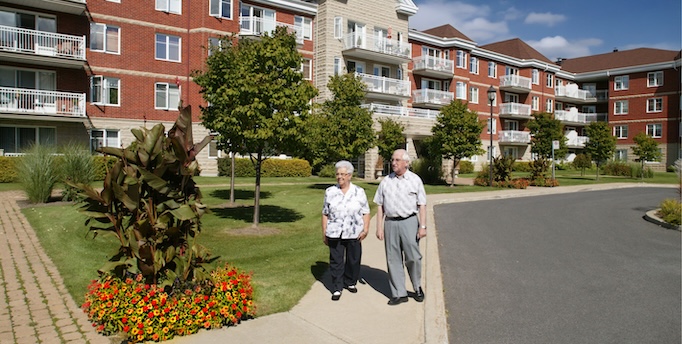
Occupancy in the senior housing sector is surging toward its highest level in nearly twenty years, according to the National Investment Center for Housing & Care (NIC). The absorption rate (the number of units that are newly occupied compared to how many are available) is outperforming every historical benchmark, and the market is pricing senior housing properties above peak levels seen in previous real estate cycles. For commercial real estate (CRE) investors, developers, and brokers, this isn't a moment in time—it may be the beginning of a generational transformation of the asset class.
So, what’s powering the surge? Let’s unpack the demographic wave reshaping demand, the tightening supply pipeline, and the new development realities redefining the sector.
The Demographic Wave
The U.S. is entering the steepest aging curve in modern history, which is expected to reshape the senior housing sector for decades. The over-65 population has already reached 59 million, representing 18% of the nation’s population, and is expected to climb to roughly 78 million by 2040. The oldest Baby Boomers also turn 80 this year, marking the beginning of a steady rise in demand for senior housing across all care levels.
There has also been a major shift in how Americans age and it is redefining living and support needs. Smaller families, fewer available caregivers, and changing economic and social conditions are pushing older adults away from traditional aging-in-place models. According to research conducted by the PwC and the Urban Institute, the number of adults over 75 living alone is expected to more than double by 2040, and adults 65–74 are now the fastest growing age group of renters. Meanwhile, equity-rich Baby Boomers make up 42% of all homebuyers1, according to the National Association of REALTORS® 2026 Home Buyers and Sellers Generational Trends Report. These factors give this demographic the financial power and motivation to transition into purpose-built senior housing as they age.
Supply Pipeline
Senior housing construction starts and units that are under development are at their lowest levels since 2012–2014, affecting every major asset class:
- Independent Living
- Assisted Living
- Memory Care
- Continuing Care Retirement Communities
- Active Adult (55+) communities
Over the last four quarters, only 7,1002 new senior housing units broke ground, a level comparable to 2009 during the housing crisis. According to Cushman & Wakefield’s U.S. Senior Living & Care Investor Survey and Trends Report, net absorption outpaced supply demand 4.8 to 1 in 2025, as the number of units under construction fell to 2.3%, the lowest level since 2012. JLL’s 2026 Seniors Housing and Care Investor Survey and Trends Outlook (JLL Senior Survey) reports that new construction starts declined 77%3 in primary markets and 60%3 in secondary markets, and have been consistently below the past 10-year average.
Investment Momentum
With demand for senior housing accelerating and new development constrained by a slow-moving supply pipeline, investors are increasingly recognizing the sector’s long-term benefits. According to the JLL Senior Survey, 86%3 of surveyed investors indicated plans to expand their exposure, underscoring growing institutional confidence in the asset class. Operational performance continues to strengthen, with occupancy climbing to 89.5%4 in Q1 2026, the twentieth consecutive quarter of increasing occupancy rates, according to the NIC. At the same time, the number of units being built has slipped to its weakest level since 2012, while inventory expanded by just 0.4%4 year-over-year in Q1 2026—a historic low. Per-unit pricing has increased by more than 40% year-over-year5, while cap rates, which measure the income yield, have compressed to around 6.2% on average6 and are widely expected to further decline. These trends show that senior housing is emerging as a stabilized, income-generating sector.
Debt markets are supporting senior housing by stabilizing floating-rate loans, providing essential liquidity for acquisitions, and enabling operators to expand and renovate. For instance, the U.S. Department of Housing and Urban Development (HUD)’s Section 232 program recorded roughly $5.96 billion to $6 billion in closed loans across 337 transactions in fiscal year 2025. The Federal Housing Finance Agency expanded liquidity by raising Fannie Mae and Freddie Mac’s combined multifamily lending caps to $176 billion for 20267, a 20.5% increase that adds roughly $30 billion of additional lending capacity to the market. These shifts indicate that lenders and government agencies are all re-engaging and directly supporting the rise in transaction velocity across the senior housing sector.
Also shaping the current landscape is a growing investor preference to acquire existing properties to renovate, rather than pursue new development. This shift is driven by ongoing supply constraints, as well as the increasing financial and operational challenges associated with ground-up projects. Elevated construction costs, expensive materials, and tighter capital markets have pushed new development to its lowest level since 2012, with projections calling for a shortfall of up to 550,000 units by 2030, representing a $275 billion investment shortage.8 Inventory growth has slowed to between 0.4% and 0.7% annually, far below what is needed to meet demand, making existing assets increasingly scarce and highly sought after.
Outlook
The senior housing sector has shifted to one of the hottest commercial real estate sectors, driven by demographic demand, historic construction slowdown, and tightening occupancy. For CRE investors, developers, and brokers, this supply-demand imbalance translates to momentum that is not expected to slow down any time soon. This shift may translate into a steady pipeline of transaction opportunities with long-term upside.
At Old Republic Title, we understand the importance of certainty, speed, and precision at every stage of a senior housing transaction. Our team of highly experienced attorneys, underwriters, closers, and title specialists assist in delivering customized title and closing services to clients across the nation. To learn more and find a representative near you, visit oldrepublictitle.com/locations.
1 Copyright ©2026 “Home Buyers and Sellers Generational Trends Report 2026.” NATIONAL ASSOCIATION OF REALTORS®. All rights reserved. Reprinted with permission. April 15, 2026. https://www.nar.realtor/research-and-statistics/research-reports/home-buyer-and-seller-generational-trends
2 “Senior Housing Demand Outpaces New Supply in 3Q24.” October 3, 2024. National Investment Center for Seniors Housing & Care. https://www.nic.org/news-press/senior-housing-demand-outpaces-new-supple-in-3q24/
3 Copyright ©2026 “Seniors Housing and Care Investor Survey and Trends Outlook Spring 2026.” Jones Lang LaSalle IP, Inc. (JLL). All rights reserved. Linked with permission. Spring 2026. https://www.jll.com/content/dam/jllcom/en/us/documents/reports/research-reports/26-insights-seniors-housing-care-investor-survey-and-trends.pdf?utm
4 “Senior Living Occupancy Grows Amid Construction Slowdown, Limiting Options for Older Adults.” April 23, 2026. National Investment Center for Seniors Housing & Care. https://www.nic.org/news-press/senior-living-occupancy-grows-amid-construction-slowdown-limiting-options-for-older-adults/
5 “Senior Housing: 5 Key Trends to Watch in 2026.” NIC MAP. December 1, 2025. Updated April 16, 2016. https://www.nicmap.com/blog/senior-housing-five-key-trends-to-watch-in-2026/
6 “Senior Housing as an Alternative Asset Class: A Data-First View.” June 3, 2026. National Investment Center for Seniors Housing & Care. https://www.nic.org/nic-academy/alternative-asset-class/
7 “Fannie, Freddie Multifamily Loan Purchase Caps to Rise 20% in 2026.” National Association of Homebuilders, November 25, 2025. https://www.nahb.org/blog/2025/11/fannie-freddie-multifamily-loan-purchases
8 “Go long in senior housing: NIC MAP Vision data reveals a $275 billion investment shortage in senior housing developments across the country by 2030.” NIC MAP. June 26, 2024. https://www.nicmap.com/news/go-long-in-senior-housing-nic-map-vision-data-reveals-a-275-billion-investment-shortage-in-senior-housing-developments-across-the-country-by-2030/
Old Republic Title, its officers and employees do not provide, and this communication is not intended to be, investment, tax or legal advice. Old Republic Title makes no representations or warranties regarding the accuracy of the information or tax consequences addressed herein. You should consult an investment, tax or legal professional of your choosing to advise you of the benefits and risks of your specific transaction.