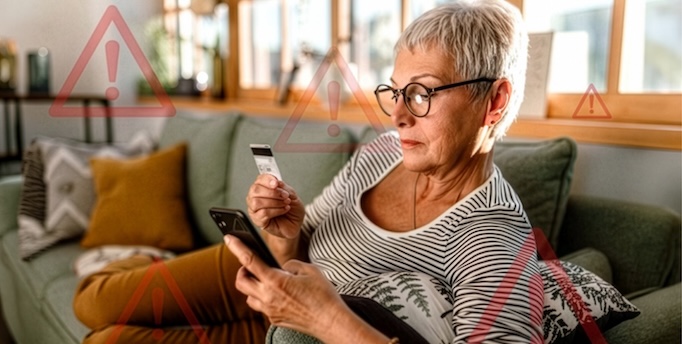
The Federal Bureau of Investigation (FBI) is warning Americans of “bank call spoofing,” a sneaky scheme that has conned bank customers out of $262 million dollars since January 2025 and continues to escalate.
How It Works
While phone call scams are nothing new, “bank call spoofing” is far more sophisticated. It happens when cybercriminals alter caller ID into displaying a customer’s actual bank as the source of an incoming call. Once the customer picks up, they are told of a recent security breach or suspicious activity in their account and the urgent need to transfer their funds into a “secure” account. Once the customer is duped into revealing sensitive information, like their password or PIN, or wiring funds into a fraudulent account, the damage is done.
Why It’s So Effective
Bank call spoofing is effective because it combines technology and human psychology to target victims in three ways:
1. Technology makes it quicker and easier to gather intel. According to the FBI, cybercriminals often start by obtaining personal and banking details via data breaches, phishing, malware, stolen databases, or dark web sources. Some scammers have also learned how to manipulate automated bank systems to obtain specific account numbers, recent transaction details, and exact balances – further lulling customers into a false sense of security.
2. “Fooling” caller ID gives scammers an “in.” Bank call spoofing is the latest example of not being able to trust what you can see. Scammers know people are more likely to answer calls from a source they know and trust. Seniors often rely on caller ID to help them screen calls, which makes them more vulnerable to impersonation schemes.
3. Manipulation tactics. The “bank representative” who calls sounds very convincing. In one case*, the victim said the scammer even provided her full bank account number and account balance to reinforce credibility before convincing her to move funds.
Between seeing the caller ID, hearing a plausible story, and trusting someone who has detailed knowledge about your account, it’s not hard to see why bank call spoofing fools so many people. It’s hard to refute all the “evidence” presented to you – but you must.
Why? Because victims of bank call spoofing are not likely to get their money back.
What Bank Customers Need to Know
Most banks cover fraud charges associated with a lost or stolen bank card because the customer’s action (losing the card) was unintentional. However, they are under no obligation to reimburse customers who provide secure log-on credentials to financial accounts or “authorize” wire transfers to a fake account. Victims have only a 72-hour window to discover and report the crime, so authorities can issue a financial fraud kill chain before the money is gone for good.
How to Avoid Being Scammed
The FBI offers these tips to avoid becoming a victim of cybersecurity scams:
- Set up two-factor or multi-factor identification on your accounts. Doing so makes it harder for scammers to access your account without alerting you.
- Examine email addresses and URLs carefully. Look for misspellings or tiny details that do not match official websites or business cards you received from a trusted source.
- Never click on unsolicited links or call unknown phone numbers. They could infect your device with malware or route you to a scammer.
Key Takeaways
- Know that legitimate organizations will never ask for your username or password. They don’t need it to access your account information.
- Be suspicious of all unexpected requests to move money. That includes any changes to wiring instructions.
- When in doubt, hang up and call a trusted phone number. Bank customers can call the phone number on the back of their bank card to speak with a trusted bank official.
You can learn more about other scams that target consumers and the real estate industry on Old Republic Title’s Company blog by selecting the “Fraud” and “Cybercrime” categories. Be sure to report all suspected fraud to the FBI’s Internet Crime Complaint Center.
*Bitdefender, “FBI warns of rising bank spoofing calls as scam callers drain accounts and nearly fool ABC7 anchor.” Sourced with permission May 2026.