The workplace landscape has settled into a new equilibrium: hybrid work remains the dominant model for many organizations, but a broader return-to-office (RTO) push has also gained traction. After years of trial and adjustment, companies are now implementing clearer in-office expectations, often two to four days per week.
According to CommercialCafe’s current U.S. Office Market Report, the national office vacancy rate reached 18.4% at year-end 2025, representing an estimated 1.5 to 1.65 billion square feet of unoccupied space across the country. At the same time, roughly 31 million square feet remained under construction as the year began, adding incremental supply to an already imbalanced market. Together, these dynamics are heightening competitive pressures for landlords and sustaining a challenging environment for investors.
This blog explores how the rise of hybrid work and renewed RTO momentum are shaping tenant decisions in 2026 and how CRE investors can respond to a workforce balancing flexibility with increased in-office expectations.
An Overview of Current RTO Developments
According to research conducted by FounderReports.com, while many headlines suggest a full return to the office, only about a quarter of companies are fully in-person. The current landscape is mixed, with some firms tightening RTO mandates while many maintain hybrid models. Here are some of the findings:
- 67% of companies offer some level of flexibility (hybrid work).
- 61% of U.S. companies have formal RTO policies requiring employees to work from the office a minimum number of days each week.
- 53.1% of employees who work from home at least sometimes are in hybrid roles, compared to 46.9% who work fully remote.
- 27% of companies have returned to a fully in-person model.
As RTO plans continue to take shape, companies are placing greater emphasis on employee satisfaction and wellness to attract and retain top talent. In this environment, hybrid work models have become a central feature of many strategies, offering the flexibility employees want while still supporting meaningful in-person collaboration. Some of the top companies leading the way in successful hybrid work models include Amazon, Google and Airbnb. For a list of the top 13 companies reported by OfficeSpace, along with details about how these companies executed their work plans, click here.
According to Cushman & Wakefield’s Office Fit Cost Guide, the cost of redesigning office space differs by location, mainly due to the varied cost of materials and labor. For instance, the average fit out price per square foot in Atlanta is $161.70; for Chicago, $174.49; for Los Angeles, $171.86; for New York, $212.59; and for San Francisco, $219.26. For CRE investors and property managers to make informed investment and operating decisions, they’ll need to evaluate the needs of their tenants, focusing on occupancy rates, space utilization and tenant feedback. Keeping an eye on the cost of fit outs and current trends can help investors make knowledgeable decisions about their portfolios and investments.
Current Design Trends
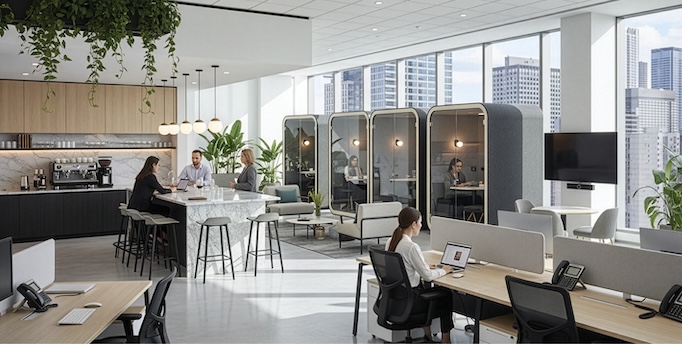
As hybrid work and evolving RTO strategies reshape workplace expectations, demand is shifting toward office space with high-quality amenities. Traditional office layouts with fixed desks and standard meeting rooms are transforming into hybrid models that allow employees to work from home while still having access to a physical office with a welcoming, well-designed and technically optimized environment for collaboration and meetings when needed. Essential office designs and amenity trends are emerging, including but not limited to the following:
-
Hot-desking. Flexible workspace arrangements where employees don’t have assigned desks and use available space at any time. The space is utilized on a first-come, first-served basis, or by reservation. Hotdesking has the potential to improve occupancy and support premium pricing models for CRE owners and investors.
-
Task-zones. Activity-based work (ABW) zones that allow employees to be more productive in fulfilling a specific need or task. Some examples include collaboration zones for group work, brainstorming and discussions; quiet zones for focused and individual work; and private zones designated for personal breaks. These zones enhance office space versatility, creating flexible, high-performance environments that can justify premium rents and strengthen the property’s competitive differentiation in the market.
-
Office pods. An office pod is a sound-proofed and mobile room that can be used as a private space for employees. They come in a variety of sizes, from smaller phone-booth-like pods for individuals to larger ones that supplement traditional meeting rooms. A recent cost study found that utilizing office pods instead of building new meeting rooms can significantly lower construction costs, with estimates suggesting potential savings of over $30 billion between 2023 and 2030.
-
Work cafés. Taking cues from coffee shops, these spaces offer coffee, teas and small lounge areas or tall tabletops for employees to work over a cup of coffee or connect with a colleague. According to research, these in-person social encounters can help promote teamwork, generate ideas and foster emotional connections that support employee wellbeing. Work cafés also elevate the building’s appeal, encouraging site engagement and increasing dwell time within the property—factors that support higher tenant retention.
-
Health and wellness spaces. Office space centered around health and wellness remains a popular trend. Enhanced indoor air quality and biophilic elements, such as plants, natural light and water features help to elevate the tenant experience. Amenities like dedicated fitness areas, walking paths and wellness rooms designed to reduce stress and boost morale further support employee wellbeing. Together, these features strengthen a property’s appeal and help position the asset competitively within Class A markets.
-
Eco-friendly practices. Tenants are increasingly prioritizing eco-friendly practices, like energy-efficient systems, sustainable materials and green certifications. This shift not only helps reduce environmental impact but also enhances property value. It can also help CRE investors and property managers realize cost savings through incentives and lower operating expenses.
-
Technology integration. Modern tenants expect secure digital infrastructure, high-speed connectivity and turnkey video-conferencing capabilities—features that are now fundamental to hybrid-work models. Properties with prewired, tech-enabled collaboration areas gain a competitive edge and attract tenants seeking seamless, high-performance workspaces. The continued integration of smart technology and AI—ranging from IoT-driven lighting and climate controls to automated, data-enhanced workplace tools—creates more efficient, responsive environments that support tenant productivity and strengthen the property’s long-term market positioning.
Conclusion
The Office sector is in a period of ongoing transition as companies implement both full and hybrid RTO plans, driving stronger demand for high-quality, amenity-rich spaces. While the market presents unique challenges, CRE investors can still find ways to maximize existing portfolios and identify new investment opportunities. Conducting thorough market research, following a disciplined due diligence process and having a clear understanding of the shift in office trends can help investors make more informed investment decisions.
At Old Republic Title, we remain committed to supporting CRE investors and property managers as they adapt their office spaces to evolving RTO strategies, whether hybrid or fully in-office, and realign their office portfolios to meet today’s tenant expectations. Our National Commercial Services team is here to provide customized commercial services whether your project is simple or complex. To learn more about our services and to connect with a team near you, visit oldrepublictitle.com/commercial/ncs/.