Since January 2016, as part of its continuing efforts to safeguard U.S. financial systems from money laundering and other illicit activity, the Financial Crimes Enforcement Network (FinCEN) has issued Residential Real Estate Geographic Targeting Orders (GTOs) requiring title insurance companies to report information about non-financed purchases of residential property by legal entities in specific locations.
Initially, GTOs were limited to residential properties over $1 million located in Manhattan, New York and Miami-Dade County, Florida.
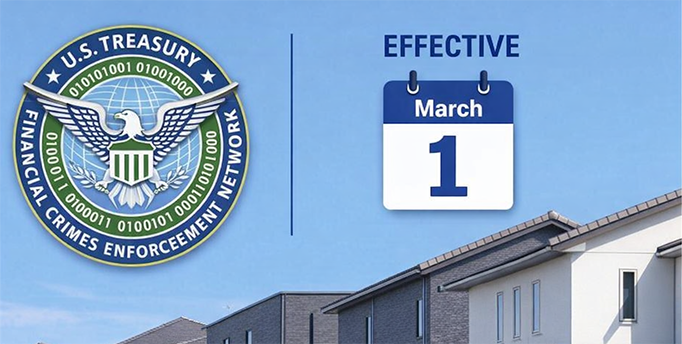
Under FinCEN’s residential real estate rule, which became effective on March 1, 2026, the GTOs were replaced with a nationwide reporting framework. The new rule has no geographic limitations and no purchase price thresholds. It requires title companies to collect and report significant amounts of private information for residential property transfers to legal entities and trusts, and offers limited transactional exemptions. The new rule marks a significant shift and introduces a new landscape for many title industry professionals across the nation.
Below is an overview of FinCEN’s residential real estate rule and five steps your business can incorporate into its current compliance efforts.
An Overview of FinCEN’s Residential Real Estate Rule
• Covered transactions: The rule covers purchases of residential real estate where the buyer is a legal entity or trust using non-institutional lending, cash, private or seller financing, or financing secured by collateral other than the property. Under the rule, a non-institutional lender is any lender that is not subject to Anti-Money Laundering and Suspicious Activity Report obligations.
• Reportable properties: Residential 1-4 family properties, vacant land intended for 1-4 family residential construction, co-ops, condominiums, mixed-use and apartment buildings.
• Territories: The final rule applies to qualifying transactions anywhere in the U.S., including Washington, D.C., Puerto Rico and Native American lands.
• Exemptions: Some transfers may be exempt, including but not limited to, transfer of an easement, a divorce or dissolution of marriage or civil union, a bankruptcy estate, or a transfer supervised by a U.S. court. For a more complete list of exemptions, see the final rule.
• Reportable information: FinCEN has identified data fields in its form documentation, including information on the property; transferee and transferor and certain beneficial owners; and source of funds, payments and reporting persons.
• Reporting persons: Unless specifically designated otherwise by a written designation agreement for a particular transaction, the rule sets out a hierarchical list of individuals tasked with reporting, headed by the closing or settlement agent on the closing or settlement statement.
Steps for Complying with the FinCEN Residential Real Estate Rule
1. Understand the Rule: Familiarize yourself with the specific requirements and reporting obligations outlined in the FinCEN rule, fact sheet and FAQs. To learn more, click here.
2. Collaborate with Legal and Compliance Teams: FinCEN requirements can be challenging to interpret. Also, transactions involving trusts and legal entities may require specialized knowledge. Working with counsel can help to ensure that title industry professionals fully understand their obligations. Doing so can help mitigate the risk of non-compliance, which could result in significant penalties and legal repercussions.
3. Monitor and Audit: Establish a system for ongoing monitoring and auditing to ensure continuous compliance with the rule. Stay informed by checking FinCEN's news page.
4. Implement Technology Solutions: Utilize technology that can help streamline the reporting process and ensure accurate data collection and submission.
5. Training and Education: Conduct training sessions for staff to ensure they understand the reporting procedures and compliance standards. Revise internal policies and procedures to align with the rule, including documentation and reporting protocols.
Outlook
Industry leaders, including the American Land Title Association (ALTA) and state land title associations, are actively supporting title industry professionals by providing extensive resources, such as educational materials, training programs and practical guidance. These efforts are designed to help the industry understand and implement FinCEN's requirements effectively. By leveraging these resources, title industry professionals can confidently meet the FinCEN regulations and minimize any potential disruptions to their operations.